Adventures in Wanting Soda Water
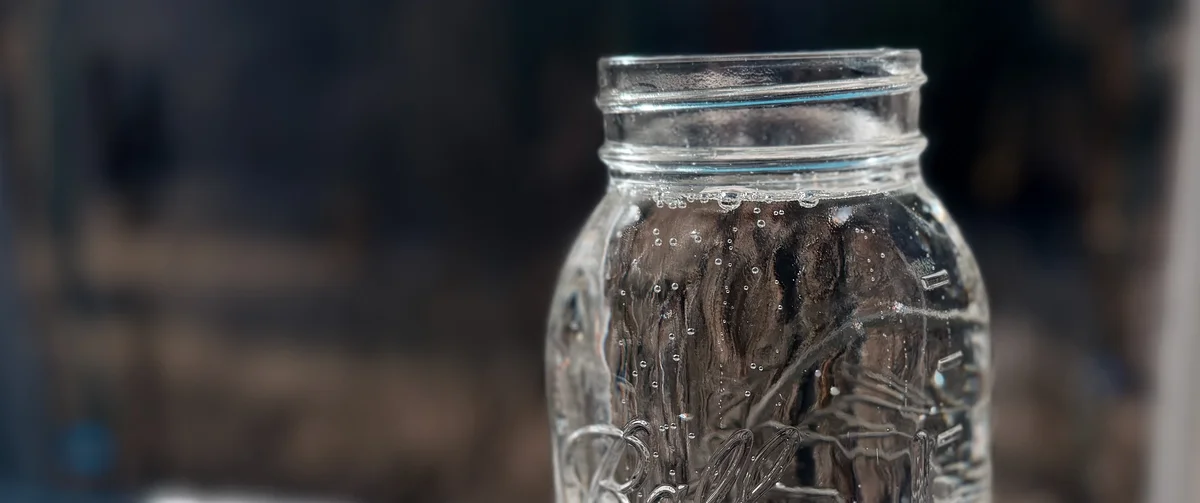
I like carbonated water. Growing up in Hungary and living in Europe for many years got me accustomed to seltzer or mineral water being everywhere: single-use plastic bottles that actually get recycled, refillable glass dispensers exchanged at the store, or most commonly, a seltzer bottle at home with those little CO2 cartridges you'd take back for refills at trivial cost.
After moving to the US, this became a problem.
Recycling here is a joke on a good day and environmentally detrimental otherwise. Glass bottles aren't taken by curbside pickup, so I have to drive 20 minutes to drop them off, which means accumulating them until the trip is worthwhile. Plastic bottles barely get recycled, and even with all the microplastic concerns, the only decent options are expensive Italian imports like San Pellegrino. Shipping water thousands of miles across the planet just to drink it and throw away the bottle feels absurd. The CO2 cartridges people used at home in Europe don't really exist here outside of paintball and airsoft, cost significantly more, and nobody takes them for refilling locally anyway.
So in the usual fashion, one weekend I got sufficiently annoyed and decided to solve this problem for the next several years. This led me down a winding path of discovering that we can't have nice things because it would endanger big corporations, or because you must pay through the nose for the privilege.
The Market Landscape
There are a handful of desktop options available. They're all terrible, expensive to run, or both. Commercial solutions have their own problems around cleaning, maintenance, and scale.
Consumer Desktop Devices
The key market players are either owned by soda manufacturers (SodaStream has been PepsiCo since 2018) or one of the "we make everything" companies that make their money selling you CO2 at 100x markup. Some require special pods that are also a ripoff. Ninja, for instance, has gone the Keurig route with unrecyclable pods headed straight to landfills and oceans. None of these make cold water. They just carbonate whatever you pour into them.
Commercial Solutions
Commercial fountain systems present practical barriers. They're designed for high volume and come with FDA-regulated cleaning and maintenance cycles to avoid becoming health hazards. Those cycles are quite a chore for home use. Commercial-style home fountain systems range from $2,000 to $6,000 and up from there if you want something that doesn't look industrial. They're primarily designed for 220V power (home kitchens don't have plugs for them) and use 5-gallon BIB syrups that would last months at normal home consumption rates. Syrup lines need weekly cleaning, connectors need weekly sanitizing, and the bags are hard to source as a consumer anyway.
The economics simply don't scale down. Restaurants use these systems because of volume. When you're serving hundreds of sodas daily, per-serving cost drops dramatically. For a home where you might drink 2-3 glasses per day, you're paying premium prices for equipment designed for 100x that volume, dealing with syrup bags that sit around for months, and managing CO2 tanks and refills that only make sense as routine business overhead.
Prosumer Solutions
Companies like Vivreau and Zip HydroTap represent the premium end of integrated water systems. These are point-of-use plumbed-in dispensing systems that connect directly to your water line and provide filtered still water, sparkling water, chilled water, and often boiling water from a single tap.
The features are genuinely compelling: direct plumbing connection (no bottles or manual filling), integrated 0.2-micron carbon block filtration, on-demand carbonation, instant boiling water, commercial-grade refrigeration, and premium aesthetics.
The problems start with price. Residential Zip HydroTap systems run $4,500 to $8,500 plus $300-600 for installation. Vivreau primarily sells to commercial and office users through distributors like Culligan Quench via rental and service contracts, with no transparent consumer pricing.
Installation is not trivial. These require a licensed plumber for water line connection, often a dedicated electrical circuit, specific under-counter clearances, and typically cutting into countertops. They're not portable or easily removable.
Ongoing costs add up fast. Service calls cost a fee plus labor for repairs. Filters need replacement every 1,500 gallons or annually. CO2 canisters need regular replenishment at retail prices. Regular descaling and sanitization are required. Some users report service contracts running around $700 per year.
Reliability is a concern based on customer reviews: recurring failures, inconsistent carbonation, water leak detection errors. These are complex machines with multiple potential failure points, and repairs require specialized technicians.
To justify a $3,500+ installed system over a SodaStream, you'd need to produce over 14,000 liters of sparkling water, roughly 38 liters per day for a year. For renters, landlords typically prohibit the necessary plumbing modifications, and the system can't move with you.
These systems occupy an awkward middle ground: too expensive and complex for typical homeowners, too maintenance-intensive for offices compared to bottled water delivery, too permanent for renters.
The Homebrew Solution
As usual, the solution for a problem that shouldn't exist comes from the DIY community. In this case, the homebrew crowd.
Homebrewers already need chilled, CO2-pressurized, convenient solutions for at-home drink dispensing. They have knowledgeable local stores with all the components and refills you'd need. Their equipment has almost all the traits required for making good soda water while using commercial-grade parts designed for years of abuse.
Meet the kegerator. It's essentially a point-of-use carbonated water system that carbonates, chills, and dispenses, all built from accessible homebrewing components. It sidesteps most of the problems above, with the only downside being that you need floor space for it rather than tucking it under a cabinet.
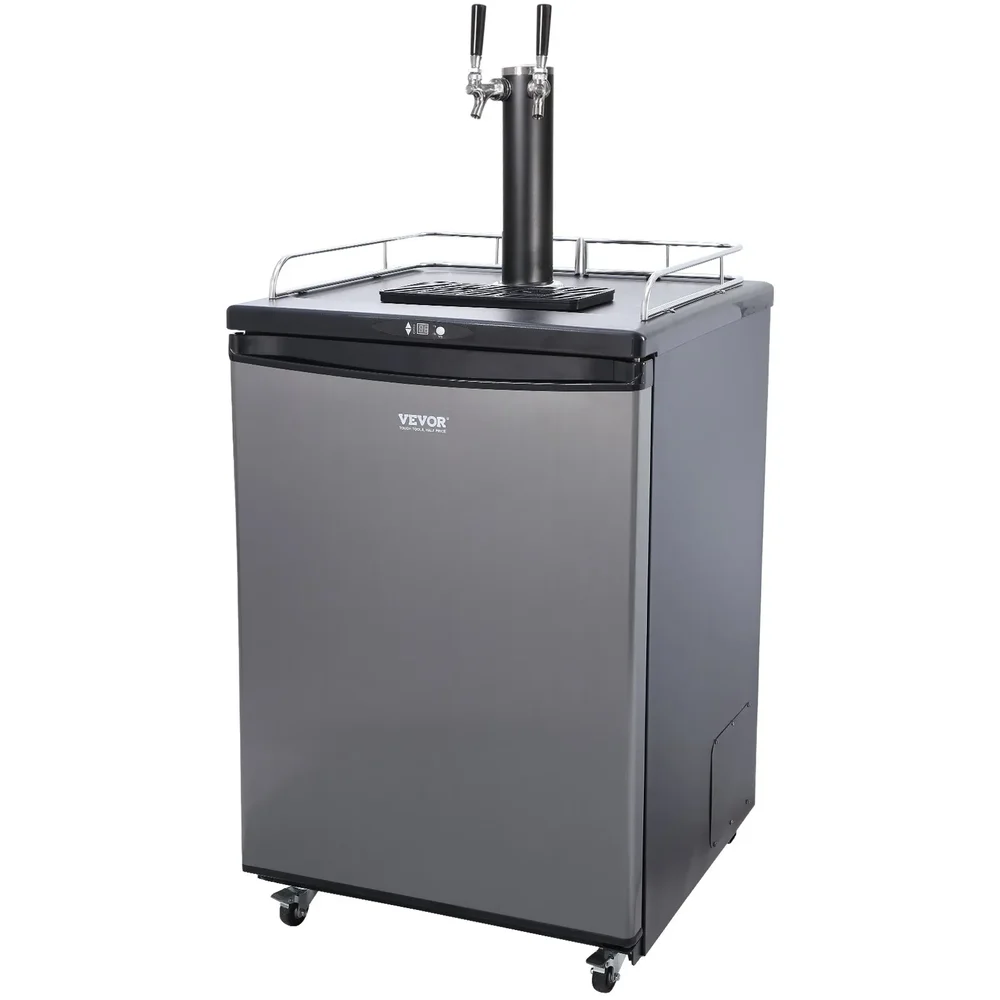 The VEVOR kegerator. Looks decent enough for a kitchen or bar area, comes with the CO2 tank and regulators.
Why This Works
I now have 10 gallons of carbonated water on tap at any time for less annual cost than SodaStream, with none of the proprietary lock-in.
The economics break down like this. The kegerator runs $400-1200 one-time depending on how nice you want it to look. Two used corny kegs cost $50-100 total. Two stainless steel quick carbonating keg lids run about $100. A 5lb CO2 tank is roughly $100 one-time and often comes with kegerator kits. Fittings are under $50 one-time. Sanitization solution is $20 and lasts years. CO2 refills run about $20 every three months, so $80 per year.
Compare that to SodaStream at $90 initial plus $15 per 60L refill ($180/year if drinking 1L/day), plus fridge space, plus bottle replacements. Or the Zip HydroTap at $8,500+ installed plus maintenance. Or a commercial fountain at over $5,000 plus complexity.
The homebrew kegerator setup provides significantly greater capacity (10 gallons constantly available versus single liters), is far more economical (a 5lb CO2 tank replaces 8-9 expensive consumer canisters), ensures consistent carbonation levels, keeps water pre-chilled, and uses standard non-proprietary equipment. It's a staple in the homebrewing community, leveraging existing infrastructure and durable Corny kegs.
This ends up costing roughly $1.30 per gallon for proper sparkling water, compared to $6-8 per gallon for store-bought, while not being a one-trick pony.
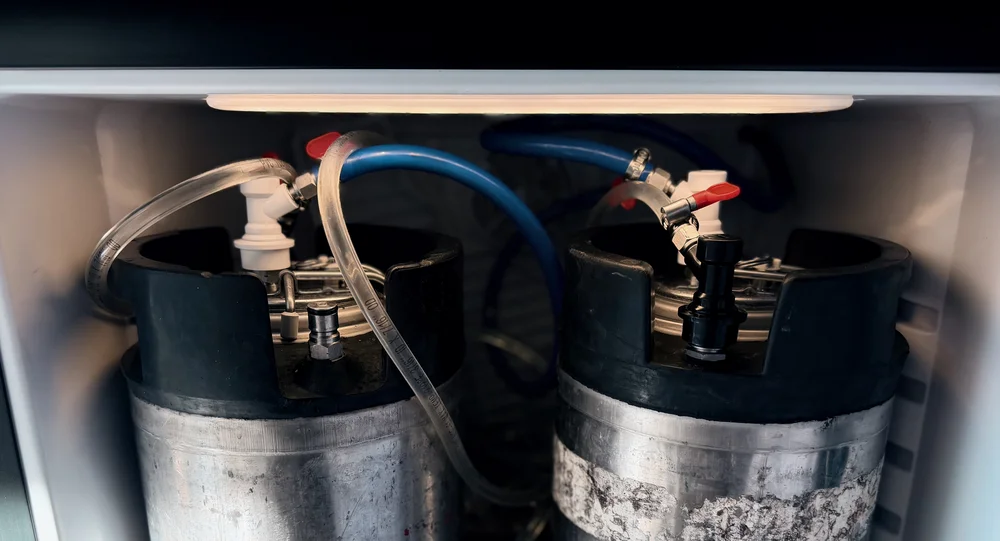 Two 5-gallon kegs inside the kegerator. One is always carbonating while the other is dispensing, ensuring continuous availability.
The Carbonation Stone
The key component is the carbonation stone, a porous stainless steel diffuser somewhat like aquarium bubblers. It's a significant upgrade over the standard "set and forget" headspace pressurization method, essentially mimicking what commercial carbonation systems do by creating thousands of tiny CO2 bubbles that dissolve much faster.
I prefer fairly fizzy water, so I leave it at 40 PSI overnight, probably hitting around 4-4.5 volumes of CO2. That's about the same as premium sparkling waters like Perrier or San Pellegrino, and considerably higher than typical SodaStream results (2-3 volumes). Most people who try properly carbonated water from a keg setup won't go back to consumer devices.
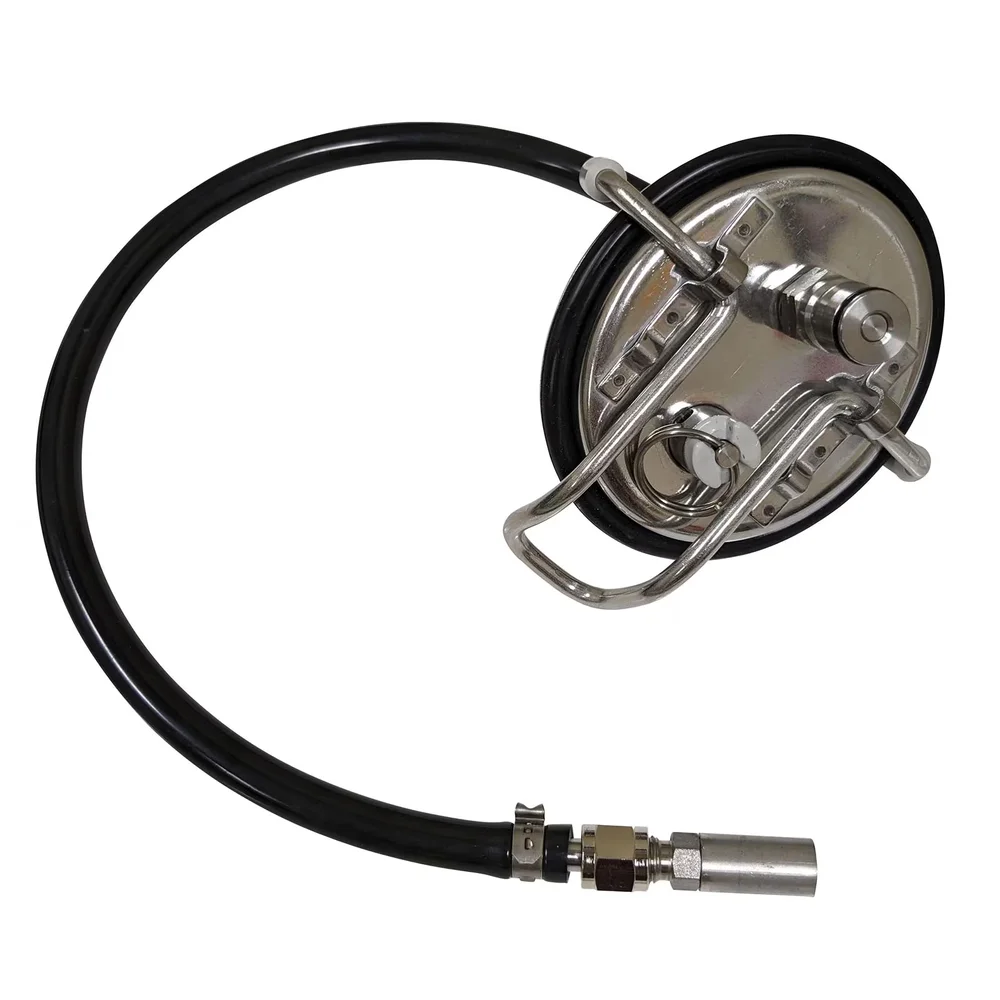 The carbonation lid with diffuser stone. The porous stainless steel creates micro-bubbles for faster, more complete carbonation.
The ability to set exact carbonation levels and have water always ready at the right temperature makes this a compelling setup. This is essentially what those $8,000 Zip HydroTaps are trying to provide, but for under $1,000 total with better capacity, more control, and no sales reps.
The Parts List
The kegerator itself is basically just a refrigerator with a specific shape to fit kegs and pass lines and taps through. The cost is driven entirely by aesthetics.
I went with a VEVOR stainless front, black top/side unit that came with the CO2 bottle, tap, and regulators, but no keg connectors. That was fine since the connectors are easy to get from Amazon. They have a nicer commercial-looking version now that I'd probably choose if doing this again.
The carbonation lids are essential. I got them from Keg Connection for around $50 each, though there are newer options on Amazon as well.
For kegs, if you can find used ball lock Corny kegs, grab them. I found some on eBay. They're easy to clean, effectively infinitely reusable, and companies cycle them out constantly. The alternative is buying new at roughly $100 each, and they'll outlive you unless you physically destroy them.
Finally, get a sanitizing solution like Star San, available at brew stores or on Amazon. This is essential for keeping the system clean and you healthy. Be careful with it though: it's phosphoric and dodecylbenzenesulfonic acid. While food and skin safe once properly diluted, in the bottle it's concentrated and will hurt you badly. Follow the handling and usage guidelines.
Current State
The system has been running for about a year now without issues. Fill a keg with filtered tap water (or unfiltered if it tastes good), connect CO2, wait overnight, and you have properly carbonated water on demand. The two-keg setup means one is always carbonating while the other is in use, so there's never downtime.
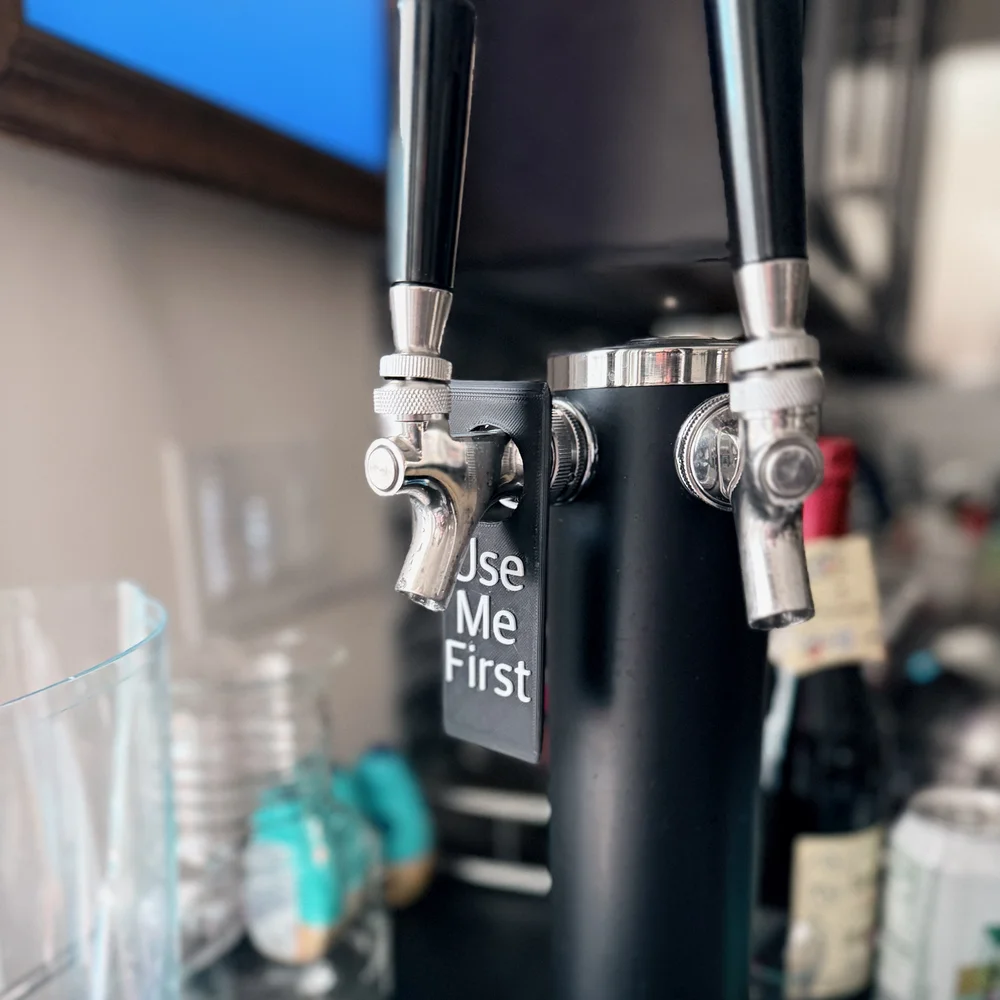 Simple flag indicator showing which tap is currently in use. Low-tech solution for tracking which keg to drink from.
Minor drawbacks exist. It takes floor space. The "wife acceptance factor" varies by household. You're filling kegs manually rather than having it plumbed. There's no integrated boiling water if that matters to you.
But sparkling water at pennies per liter, consistently chilled, always on tap, and free from vendor lock-in makes those tradeoffs worthwhile. If you have the space and drink enough carbonated water to be annoyed by the alternatives, this is the way to do it.